 |

News & a collection of some of the most frequently asked
|
|||||||||||||||||||||||||||||||||||
|
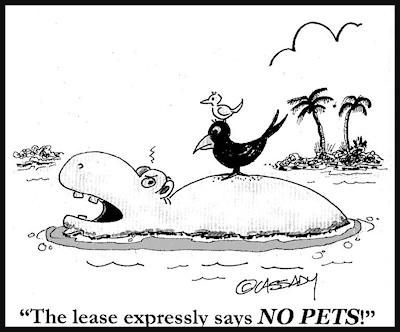
ToonMaker.com News… Cassady Cartoons Published by the Mid South Cartoonists Association (MSCA) January 8, 2021 - Jack Cassady recently had several of his animal themed gag cartoons published by the Mid South Cartoonists Association (MSCA) based in Memphis, TN. The MSCA under the current leadership of Kevin Williams publishes a periodic cartoon comic on various themes. Jack was invited to publish some of his work. Jack founded the organization back in 1987 when he lived in Memphis and was a grad student at the University of Memphis (aka Memphis State). The organization has been the premier group of professional and amateur cartoonists, writers, collectors and enthusiasts in the mid-South area. The group meets monthly to discuss Toons and Tools. For more information see the www.midsouthcartoonists.org
Jack's July Cartoon Portrait/Caricature Class shows off their Certificates and Artwork
Jack's next week long class will be "Beginning Cartooning" scheduled for July 1-6, 2018. Please check the folk school catalog or on-line catalog under "Drawing" at www.folkschool.org. Cassady Receives Cartoonist of the Year Award
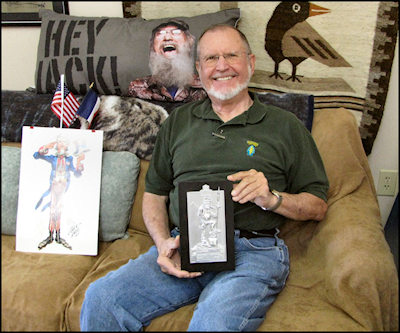
Cartoonist and Humorous Illustrator John R. “Jack” Cassady was recently presented with the Jack Davis Award (Cartoonist of the year) for his life time achievements and contributions to the funny business and education of cartoon art. The award is named after the nation’s late premier humorous illustrator, cartoonist and avid Georgia Bulldog fan and Mad Magazine artist, Jack Davis. It was presented at the annual meeting of the Southeast Chapter of the National Cartoonists Society in Roanoke, VA. (The SE Chapter of the NCS is made up of professional cartoonists from about 10 states) Cassady started cartooning at about age 5. He has lived in Cherokee county with his lovely wife and attack critters for 19 years. He’s an expert on the copyright law for visual communicators, former chairman of the Department of Sequential Art at Savannah College of Art and Design, Producer and host for the national Public TV Series “Funny Business, the Art in Cartooning” and regular contributor to Heartland Boating Magazine. His freelance visual humor has appeared in hundreds of national and international publications and books. His internet/email humor feature “Cassady’s MONDAY FUNNIES appears weekly and is available by subscription. Cassady, a decorated and retired Army Officer with two combat tours with the Green Berets in Vietnam and Laos, teaches part time at the J.C. Campbell Folk School in Brasstown, NC. Jack's week long Basic Cartooning Class at the J.C. Campbell Folk School completed in October 2015.
First Friday Art Walks
Jack's Current Teaching Schedule at the John C. Campbell Folk School for 2018 Jack’s scheduled John C. Campbell Folk School classes are as follows:
Watch for additional classes and dates to be announced... State Record Set for Longest Comic Strip (nearly 30 feet):
A Kind Word by Cartoonist Scott Adams of “Dilbert” fame.
Tribute to unsung heroes of the funny business of cartooning. In professional cartooning there are several ways for a cartoonist to come up with ideas. The first is to generate all of his/her ideas alone. Next, the cartoonist may exclusively use ideas generated by professional humor writers. Finally, the most common method used by active cartoonists is to generate their own ideas about half the time and to use gags submitted by professional writers the other half. While writers are compensated for the ideas a cartoonist sells, they rarely receive recognition for their creative products. They are truly unsung heroes of the funny business of professional cartooning. Some of the talented writers Jack has worked with over the years include: Rex May, Lloyd Byers, Harald Bakken, Rex Stein, Coke Ellington, Norb Otto and others. Comics Conventions Each year throughout the U.S. a series of ComicCons appear in many different cities. These Conventions usually celebrate Comics and Cartoon Art. Visitors will find many booths displaying collections, original cartoon art and a wide array of other interesting subjects. Most ComicCons are family friendly and make for fun and informative outings.
|
|||||||||||||||||||||||||||||||||||





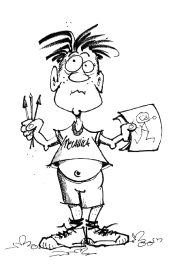
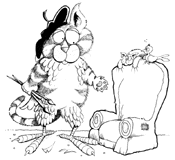
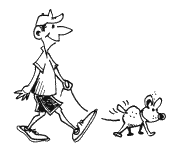
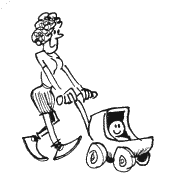
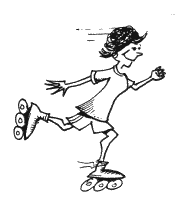

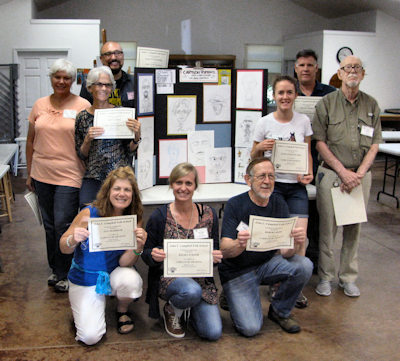
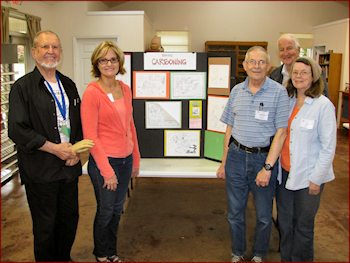 Jack's week long Basic Cartooning Class at the J.C. Campbell Folk School, completed in October 2015, was a huge success.
 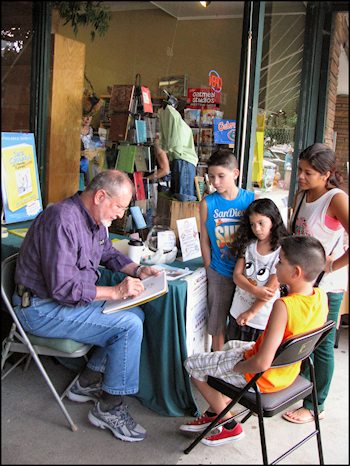 Jack will be participating in the “First Friday Art Walks” in Murphy, NC starting in June. He’ll be drawing cartoons and cartoon portraits for donations to the local Valley River
Humane Society Animal Shelter and Logan’s Run animal charities. He may be found in or near the Daily Grind Coffee/Wine Shop.
Jack will be participating in the “First Friday Art Walks” in Murphy, NC starting in June. He’ll be drawing cartoons and cartoon portraits for donations to the local Valley River
Humane Society Animal Shelter and Logan’s Run animal charities. He may be found in or near the Daily Grind Coffee/Wine Shop.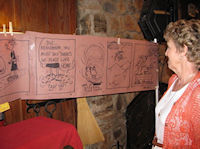 NC State Record for “the longest
comic strip...” created by one of Jack’s talented classes.
NC State Record for “the longest
comic strip...” created by one of Jack’s talented classes.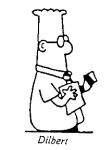 Scott Adams’ comic strip “Dilbert” appears daily in hundreds of newspapers world wide. His characters have also appeared in many books and motivational materials and are licensed for many uses. Dilbert has become a favorite of workers in the Corporate World. Scotts’ Dilbert also has a strong Internet presence. It was to his Internet fans that this letter was written.


About Jack | Just For Fun Gallery | Learn Cartooning | ToonMaker Products | FAQ | Contact Us | Home
© 2021 Jack Cassady
Warning: Images on this website are copyrighted
material protected by title 17 of the
Federal Copyright Law of the United States. Permission to reproduce any
or
part of these images may be secured by contacting Jack Cassady.
site by DeLong Web Designs